
Slow journey through the samurai kingdom where tourists don't arrive
Slow journey through the samurai kingdom where tourists don't arrive
The neons, the towers of enormous height, the shrill music of infantilized pop, the aesthetic otaku, the illuminated skyscrapers, the karaoke, the roar of the premises of machines with balls that hide absurd treasures... It seems that everything in Japan leads to a very urban, ultra-modern, fast-paced idea of life, where people are anonymous little bits floating in mega-cities like Tokyo or Osaka. Everything? No (and here we could take out the magnifying glass as in the asterix cartoons drawn by uderzo). Not all, because there are small villages that resist the passage of time and are preserved as they were decades ago, even centuries ago. As if the impressive snowfalls they receive in winter had frozen their streets, their houses, their lifestyle, and remained in the same place, but in another time.All of this is located in the middle of the main island of Japan, in the so-called Japanese Alps, and shirakawago, gokayama and ainokura are the towns that most proudly display this banner of tradition. The first, in fact, is a fixture on the lists of the most beautiful places in the country that they regularly compile in Japan, where they are very fond of rankings. And all of them are flagging up a concept of slow tourism that is gaining more and more followers: not to accumulate more thumbtacks on the map of places visited, but to soak in the calm and the taste for goldwork and detail that still characterizes the Japanese spirit.
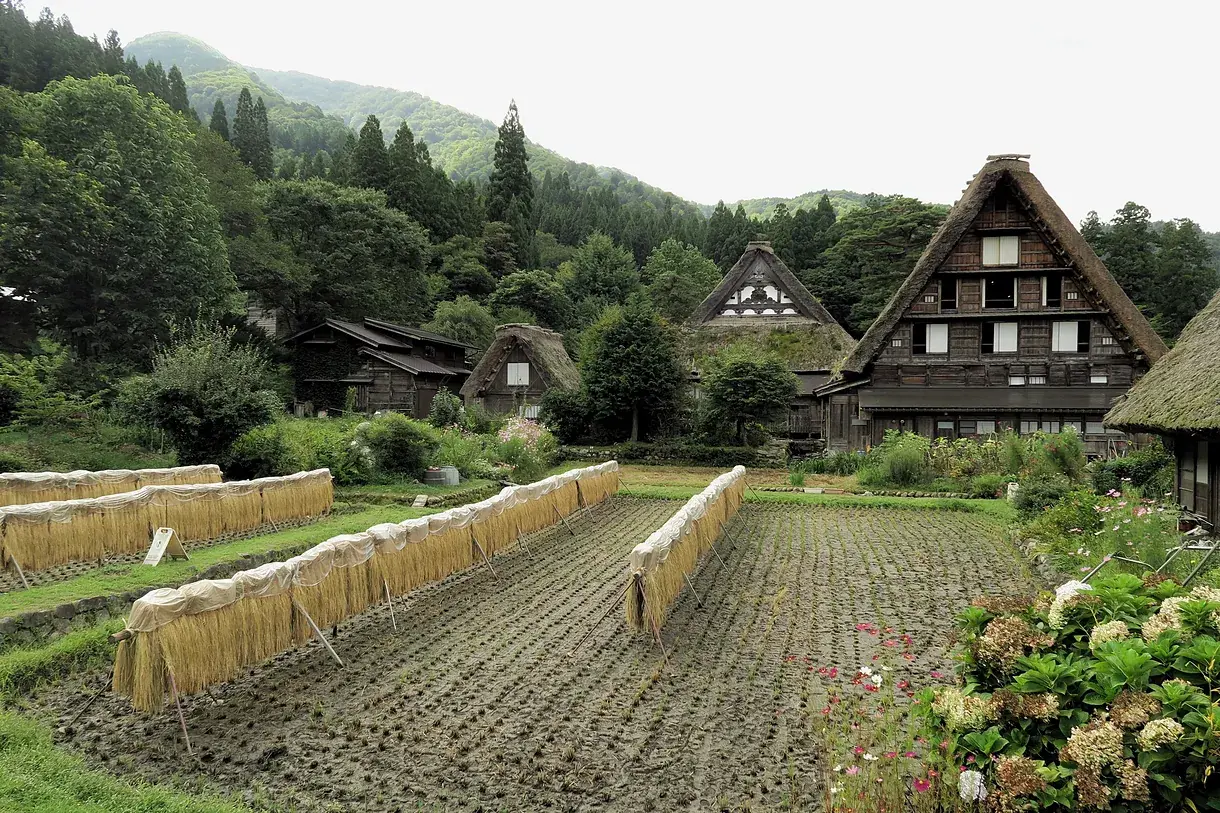
Shirakawago is the village of gassho-zukuri style houses, with its tall thatched roofs in the shape of inverted uve. Any Japanese who asks about housing in this town will make the gesture of a prayer with their hands. In fact, its name could be translated as "the houses of the hands to pray ", for the shape of its roofs. In total, there are 59 historic houses here, and many of them are visitable, such as the kanda house, an impressive four-story building and loft, all in wood, where you can see old clothes, farm objects from the early 20th century and even a wall telephone installed in 1890.
It may smell like smoke during the visit. There's no need to worry: every day in the main hall on the ground floor they light a fireplace to scare away wood-eating insects from the roof.
One of these historic houses has been converted into a rest area open to the public for free, to refresh yourself a little, take your shoes off and lie on your bamboo MATS to watch the people pass by.
Apart from a visit to the shirakawa hachimangu shrine, an authentic haven of peace, the most appealing thing in this town is to wander its streets and enjoy the valley looking for the best perspective for a picture of the whole: with water lilies, with a temple in the background or with multicolored flowers in summer. And better yet, take a walk up to the ogimachi lookout point, from where you can see the perfectly defined valley and village at a glance, to wonder how life has stopped in time and yet shirakawago is not just a postcard, but a village where children ride their bikes and from time to time you hear the noise of farming in the distance.
This charm of an image of Japan that seemed lost in time is accentuated in gokayama, a few kilometers away, where the first thing that draws attention is its peculiar access: from the car park you go down and cross a pedestrian tunnel to go down to the valley.
Here the places focused on tourism are a minority, although there are places like the arai noodle stall where you can try the typical gohei-mochi, a kind of big rice lolly dipped in a delicious sauce, and the noodles with vegetables extravagant in our eyes. In this town as well as in shirakawago, you have to forget about the typical souvenirs and pay attention to the local handicrafts, especially silk scarves (which have been made for centuries in the gassho towers) and mobile phones and bells made of wood or bamboo.
In gokayama there are about twenty of these traditional houses and it is worth looking for the viewpoint that comes out of the car park to admire the whole, with the rice fields of an intense yellowish green in summer, like van gogh's brush brush when they are freshly mown.
Only a few kilometers away is the third of these traditional villages, ainokura, the most authentic of all, where even in high season hardly tourists arrive. Of course, you have to sharpen your sight: what appears to be just a house houses an accommodation or a food house. Everyday life runs its course and is a good place to chat with the friendly locals (or at least try to sign) and look for a spot from which to observe the set of rice terraces arranged on the terrace at sunset.