
Europe's possible plan to avoid new tariffs from Trump
Europe's possible plan to avoid new tariffs from Trump
During a press conference on Friday, the president of the European Commission Ursula von der Leyen hypothesized a plan to prevent the new president of the United States, Donald Trump, from imposing heavy tariffs on European products, a circumstance much feared by European governments and companies following his victory in the recent US presidential elections.Von der Leyen said European Union countries should buy even more liquefied natural gas (LNG) from the United States, which is now one of the world's leading exporters of this fossil fuel. Von der Leyen did not explicitly say that this decision would be taken to avoid tariffs: but she suggested this plan when answering a journalist's question about Trump's victory and the possible tariffs he could impose on European products. Trump, moreover, is known for making agreements of this kind, which are unconventional and transactional in nature.
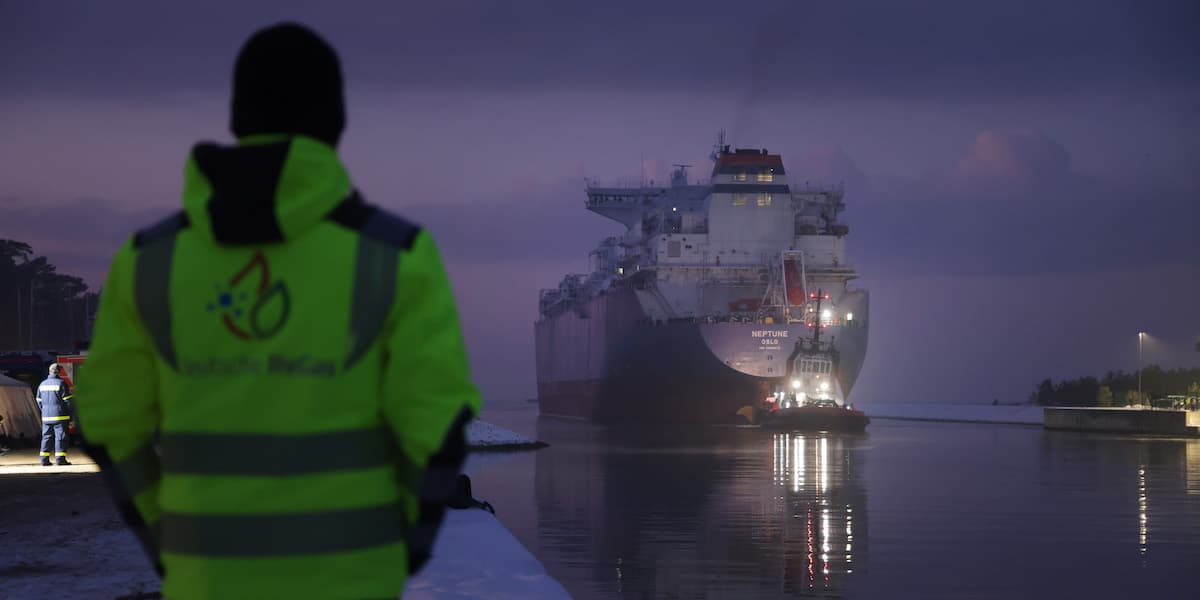
Already today, European Union countries import a lot of liquefied natural gas from the United States, i.e. converted into liquid form and transported on board huge ships. According to data from the Agency for the Cooperation of Energy Regulators (ACER), in 2023 the countries of the European Union plus the United Kingdom imported approximately 155 billion cubic meters of liquefied natural gas, mostly from the United States . An analysis by Bloomberg indicates that Western European countries alone imported 50 billion cubic meters in 2023.
Imports of liquefied natural gas to Europe from the United States have greatly increased after the Russian invasion of Ukraine, which prompted European countries to greatly reduce the import of natural gas from Russia through pipelines. Yet imports of liquefied natural gas from Russia have never stopped, on the contrary: ACER estimates that in 2023 the European Union imported 18 billion cubic meters of liquefied natural gas from Russia, «mostly due to supply contracts long-term agreements signed before 2022”, i.e. before the invasion of Ukraine and the resulting sanctions on Russia.
Von der Leyen's plan essentially involves further increasing imports of liquefied natural gas from the United States as contracts for Russian gas supplies expire.
Some experts are skeptical that such a plan is feasible. Laurent Ruseckas, energy expert at the multinational S&P Global, told Politico that the European Union itself cannot purchase liquefied natural gas: "there is a global market, in which private buyers of liquefied natural gas stipulate their contracts" . It is possible that a European protocol could still exert some pressure and discourage buyers from buying Russian gas, or from buying US gas, but the concrete effects of such a measure are not immediately quantifiable.
Von der Leyen's idea is not new, however. Already in 2018, his predecessor Jean-Claude Juncker managed to avoid higher tariffs on European products during Trump's first term by promising that the European Union would purchase greater quantities of liquefied natural gas and soybeans from the United States. Even then «the European Commission did not really have the power to force European companies to buy US gas and soybeans, but Trump was still happy to accept this political fiction by being able to show data that European Union purchases were actually increasing », writes Politico .