
Social media now calls for boycotting men – there are four rules
Social media now calls for boycotting men – there are four rules
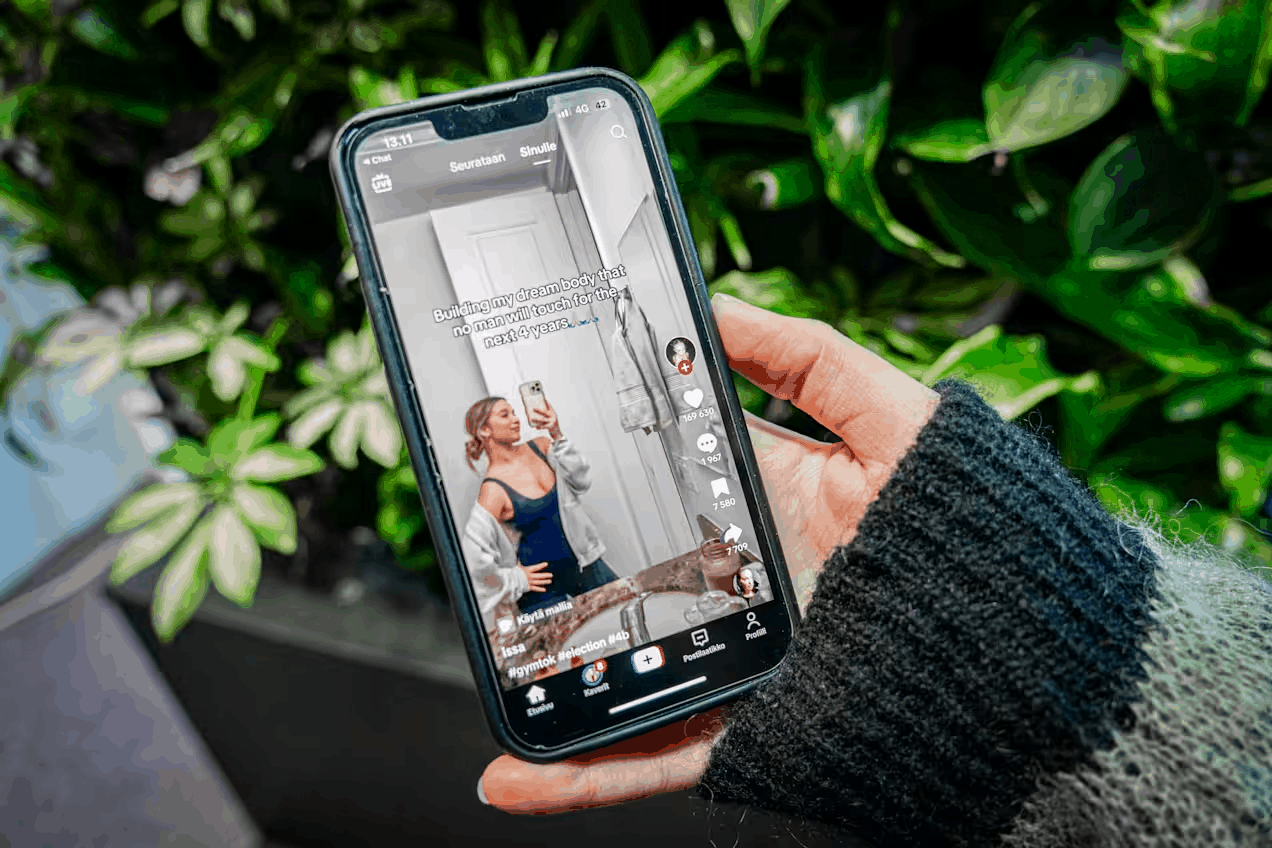
No dating. No heterosexual sex. Not getting married. No children.A trend is now spreading on Tiktok, X, and other social media platforms urging women to boycott men and even break up with their partners.
The so-called 4B phenomenon took off after Republican Donald Trump won the US presidential election. Trump's campaign was marked by tearing, at times misogynistic rhetoric.
In one Tiktok video with over 1.7 million likes, a young woman writes:
I am doing my part as an American woman, having broken up with my Republican boyfriend last night and officially joined the 4B movement.
The graphic below shows how the number of 4B Google searches increased in the United States during Election Week. The vertical scale shows the popularity of the search "4B" during the given time period, not the number of searches. With a value of 100, the search was at its most popular.
The popularity of the phenomenon may be a reaction to Trump's election, says Tuija Saresma, Professor of Cultural Studies at the University of Eastern Finland.
Trump's behavior has supported the idea that women are men's commodities. In this movement, it is as if we are playing the same game: we are talking about the existence or non-existence of bodily self-determination," Saresma, a cultural and gender researcher, tells Yle.
According to Saresma, 4B is about turning frustration into action. Those involved want to show that you can't just walk over them," Saresma says.
"The phenomenon can have influence"
According to Saresma, 4B is also a way to counter so-called gender populism, i.e. how gender has been harnessed for reactionary political use.
This has manifested itself in different countries, for example, as violations of women's rights.
– If politics is made under the guise of gender, women then make politics by even refusing to have a relationship, Saresma describes the 4B phenomenon.
"This demonstrates that power also lies with those who may be subjugated.
In many videos posted on social media with the 4B hashtag, people say, for example, that they wish 4B would change expectations of women.
In some videos, men encourage women to join the trend. They justify this by, for example, saying that women have lost the right to their own bodies with Trump's victory.
Yle is not aware of whether the persons who shot the videos comply with the 4B guidelines in practice.
According to Saresma, it is very difficult to estimate how the phenomenon would possibly spread to the physical world, i.e. to what extent women would on a large scale begin to refuse sex or a relationship with a man, for example.
"This can be a form of clickbait activism. But it can also really be channelled into women's lives and thus into men's lives as well," Saresma says."This can be a form of clickbait activism. But it can also really be channelled into women's lives and thus into men's lives as well," Saresma says.
While 4B may be an escalation and provocation, Saresma says it's interesting that it has become something of a hit.
"Maybe it's a marginal phenomenon for a small group, but it can still have an impact. It can make people think about bodily autonomy, for example," Saresma says.
"However, a more effective way to influence things is in the field of politics, through democracy," he points out.
4B is originally from South Korea
The 4B movement was originally born a few years ago in South Korea when women had had enough of the hatred and abuse directed at them. The name 4B comes from four Korean non-sentences.4B was a response to the phenomenon of men eavesdropping on women in toilets and during sex without consent. In protest, the protesters announced an end to heterosexual relationships.
However, refusing heterosexual relationships or reproduction as a political tool is a much older issue that has been used around the world, says Professor Tuija Saresma.
4B has also been reflected in the number of Google searches in Finland during the past week:
On social media, the 4B phenomenon has also provoked backlash.
The phenomenon is opposed by, for example, far-right podcast celebrity Nick Fuentes. She has commented on the trend on messaging service X with the words "Your body, my choice. Forever." Fuentes has been an opponent of abortion rights and a Trump supporter, although in the run-up to the election he changed his opinion and began to criticize Trump harshly.
The phrase is a twist of the slogan "my body, my choice". It was used in the 1960s by feminists who defended women's right to abortion.
Fuentes' version has spread quickly on social media. According to the British newspaper Independent, many social media influencers advocating for women's rights report comments they have received in which the phrase is versioned.
Correction 11/9/11 at 11:09 a.m. Nick Fuentes was previously a Trump supporter, but has since changed his stance on him.